


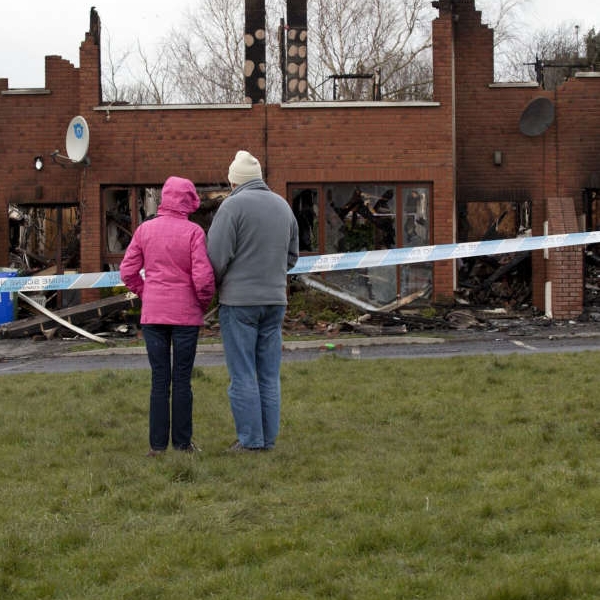
Questions have been raised about why the State’s new defects scheme will exclude houses - despite cases like Millfield Manor in Newbridge, where six homes burned down in under an hour due to poor fire stopping between the houses.
A two and a half billion euro repair scheme for defective Celtic Tiger apartments is set to come before the Dail in the coming months.
Between 50 and 80 per cent of apartments built between 1991 and 2013 had fire safety, structural or water ingress defects.
Questions have been raised about why the State’s new defects scheme will exclude houses - despite cases like Millfield Manor in Newbridge, where six homes burned down in under an hour due to poor fire stopping between the houses.
Six houses were gutted by the fire in 2015 and a report in 2017 cited several fire-safety issues.
The concerns were raised during a discussion around the general Scheme of the Apartment and Duplex Defects Remediation Bill, which will offer grants to fix fire, structural and water defects in apartments and duplexes built between 1991 and 2013.
The scheme was originally due to be brought in during the last government’s term.
Experts told an Oireachtas Committee that construction defects in Kildare and elsewhere show the problem is not limited to apartments, yet Government plans will only cover apartment and duplex blocks built between 1991 and 2013.
They warned that many Kildare developments from that era are likely affected, but some cannot even access the scheme because their common areas were never legally transferred - an issue that affects roughly one in four multi-unit developments nationally and is already blocking progress on pilot projects.
Around 100,000 apartments and duplexes built between 1991 and 2013 may have serious fire or structural defects.
Speaking at a recent meeting, Senator and Punchestown native Aubrey McCarthy said: "Over recent months at meetings of this committee, various witnesses have shared how many homeowners and apartment owners were failed by builders and certified professionals and a system of oversight that just did not work."
He added: "What we have found time and again is that taxpayers are shouldering the burden of all of this. This committee needs straight answers about who enforced, who signed off and the liability. From the very start, there seems to be no accountability regarding all those who were legally responsible. They are able to get off scot-free and the taxpayer pays.Does the Bill contain a mechanism to identify and then pursue the developers, designers, certifiers or insurers responsible for the defects, so that the taxpayer is not asked to fund 100% of the remediation, as is the case now?"
Kevin Hollingsworth, speaking on behalf of the Society of Chartered Surveyors of Ireland, cited a development in Newbridge as an example of how homes are also impacted by potential defects and safety issues.
"At Millfield Manor in Newbridge, a row of houses that should have lasted six to eight hours burned down in an hour because of the absence of correctly detailed party walls. Houses are affected, but from the first meeting of the defects in apartments working group, houses were excluded. That decision was taken at the outset," he said.
Experts also told TDs at a meeting that the Government’s proposed ten-year window to complete the scheme is not realistic, given the volume and complexity of the defects already identified.
Mr Hollingsworth also alluded to the cost of individual repairs under the scheme.
It is expected that the average cost of remediation is approximately €25,000 per unit, which means remediation could cost the State between €1.5 billion and €2.5 billion.
But Mr Hollingsworth said remediation can range from €15k to €40k per apartment depending on complexity.
He also said a system in the 1990s allowed some buildings to be constructed and certified without ongoing inspections, adding that local authorities need far more inspectors, funding and enforcement powers.
Under the scheme, it is expected that Owners’ management companies (OMCs) - the groups that run apartment and duplex blocks - will get funding to fix defects in their buildings.
All repairs will be planned for the whole block at the same time, covering both common areas and individual units.
The funding amount will depend on the issues found.
Experts told the Oireachtas committee, however, that most OMCs simply don’t have the technical or legal expertise to manage multimillion-euro fire-safety and structural repairs.
They said the scheme cannot work without funded project managers and tenant-liaison officers, warning that remediation projects often fail without someone to manage access to occupied apartments.
The committee also heard that public-sector procurement rules are too slow and complicated for volunteer-run OMC boards to navigate.
Around a quarter of developments don’t have their common areas legally transferred, which is already blocking some buildings from even entering the scheme.
Witnesses said many OMCs also lack the money to deal with non-defect fire-safety upgrades and warned that some owners who paid special levies may not be reimbursed unless the legislation is tightened.
 Newbridge Silverware’s Silver-plated Cutlery Factory Officially Closes
 Martin Heydon Will Meet Farming And Haulier Groups This Morning Amid Fuel Protests
 Missing 17-Year-Old Joshua Treacy From Maynooth Has Been Located
 Section Of N7 Northbound Closed Due To Protests
 Kildare Filling Stations Among The More Than 100 Out Of Fuel
 Cost Of Solar Panels In Kildare Falls By 39% Since 2020
 Water Outage In Place For Maynooth And Straffan Tomorrow
 Kfm Obituary Notices