

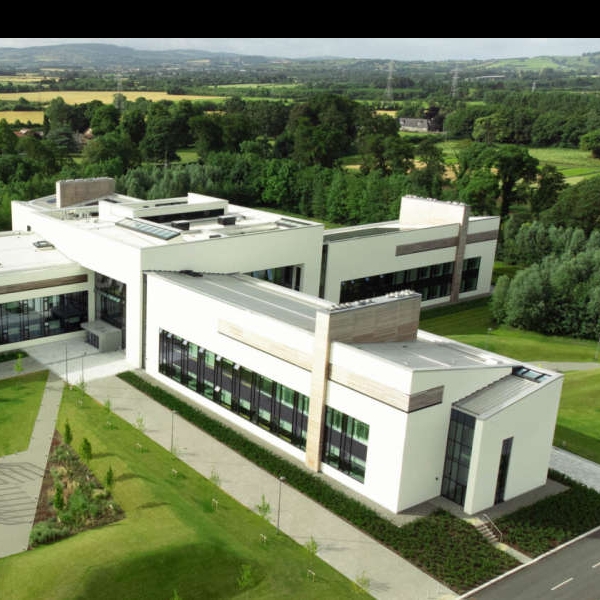
From drugs and gang activity to sexual assaults and suspicious deaths, much of the State’s forensic workload is now processed in Kildare.
Behind the scenes of major criminal investigations across Ireland, a vast amount of evidence ends up in one place: Backweston in Celbridge.
Forensic Science Ireland’s national headquarters became fully operational in 2024.
The latest annual report shows how central the Celbridge facility has become to tackling serious crime.
From drugs and gang activity to sexual assaults and suspicious deaths, much of the State’s forensic workload is now processed in Kildare.
Last year, Forensic Science Ireland issued almost 18,000 forensic reports.
That work helped gardaí progress nearly 1,000 criminal investigations.
Cases are not just increasing in number; they are also becoming more complex.
Scientists dealt with sophisticated drug concealment methods, highly potent synthetic substances and large-scale DNA analysis.
One of the most significant drug cases referenced in the report has a direct Kildare connection.
Around 60 kilograms of heroin was seized after a light aircraft landed at Weston Airport.
The drugs were analysed at the Backweston laboratory.
Forensic testing confirmed the purity and composition of the heroin, providing crucial evidence for the investigation.
It was one of the largest heroin seizures in the State in recent years.
The Kildare-based laboratory also played a key role in identifying new drugs on the Irish market.
Scientists detected ten substances never previously identified in Ireland during 2024.
These included powerful synthetic opioids and cannabinoids.
Some were significantly stronger than heroin.
Others were found in vapes and tablets designed to appeal to younger users.
All were analysed and flagged from the Backweston facility.
The National DNA Database remains one of the most powerful crime-fighting tools available to gardaí.
Forensic Science Ireland says every new crime stain now has a one-in-two chance of being matched to a person already on the database.
In 2024 alone, hundreds of investigations were aided through DNA links.
Many involved burglary, vehicle crime and assaults - offences regularly investigated in Kildare towns.
The report also highlights an increase in suspicious death investigations.
Forensic Science Ireland assisted with 41 such cases last year, using DNA, fingerprint and chemical analysis.
The Kildare facility also supported major cold case reviews and international investigations, linking Irish evidence with European DNA databases.
In addition, scientists helped identify 32 missing persons, bringing closure to families, sometimes decades after individuals disappeared.
The move to Backweston marked the biggest upgrade in Ireland’s forensic capability in decades.
More than one million fingerprint records were transferred to a new biometric system.
Over €1 million worth of advanced scientific equipment was installed.
Today, the Kildare campus handles the bulk of Ireland’s forensic testing.
That includes drugs, DNA, firearms residue, documents and toxicology.
 €7,750 In Grants Awarded to Kildare Groups Promoting Activity Among Older People
 Property Prices On The Rise In Kildare, Report Finds
 Kfm Obituary Notices
 Gardaí Investigating Two Connected Burglaries In Kilcullen
 Harvey Norman Nationwide Cancer Fundraiser Launched
 Major Garda Crackdown In Place On 'Lucky Dip' Criminal Gang
 Fuel Price Protests Enter Second Day with Nationwide Action Planned