


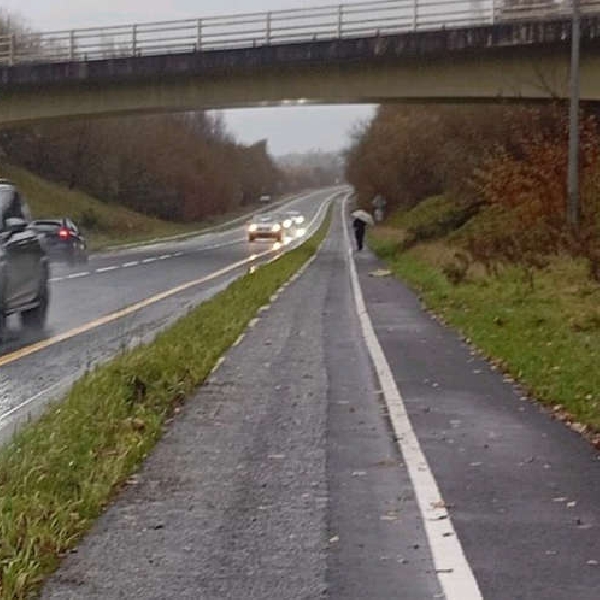
The audit, seen by Kfm News, uncovered a range of serious design flaws that could endanger the safety of motorists, cyclists, and pedestrians.
Kildare County Council’s €1.6 million cycleway project between Moone and Timolin is under intense scrutiny following a damning Road Safety Audit commissioned by the council itself.
The audit, seen by Kfm News, uncovered a range of serious design flaws that could endanger the safety of motorists, cyclists, and pedestrians.
Intended to improve road safety, the cycleway’s current design raises multiple red flags and has been called into question by both local residents and experts.
The audit, published as a final draft today (February 6th), found that the wide carriageway on the R448 encourages high-speed traffic, which increases the risk of high-severity collisions with vulnerable road users.
According to the report, the “wide optical width” of the road facilitates faster driving, leaving cyclists and pedestrians at risk. This “lack of traffic calming measures” has resulted in unsafe speeds across the route, and as the audit points out: “Wide carriageway width and limited substantial features facilitate high speeds and provide limited feedback for errant vehicles prior to conflicting with elements of the active travel facilities.”
The report recommended narrowing the road to reduce vehicle speeds and adding traffic islands to slow traffic at key points. However, these measures have yet to be fully implemented.
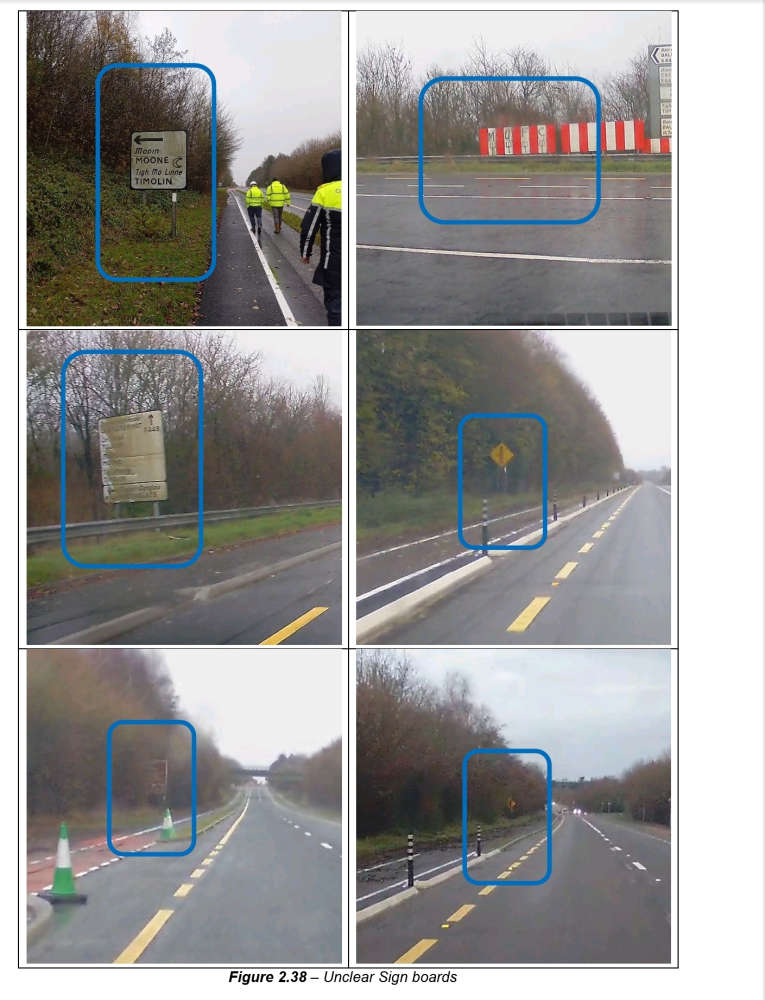
The cycleway’s gateways, designed to slow traffic at key entry points, were found to be ineffective in the audit. The findings revealed poor signage and misaligned signs, with some signs facing the wrong direction or obscured by other road elements, which reduces their effectiveness in alerting drivers to reduce speed. “This layout is ineffective in reducing the optical width and in providing a clear layout to approaching motorists,” the audit states.
The report detailed how a lack of adequate lighting further diminishes the gateways’ effectiveness, making it difficult for drivers to see and react to changes in road conditions.
“Improved signage and lighting must be installed to ensure drivers can clearly see and react to changes in the road,” the report stated.
The audit also raises serious concerns about the safety of cyclists and pedestrians using the cycleway.
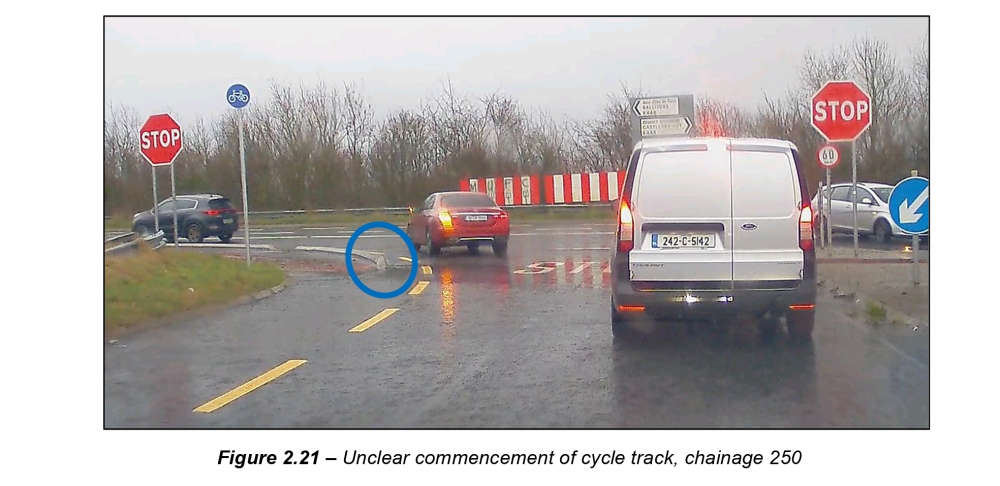
Cyclists face narrow openings at junctions that are “difficult to navigate”, the audit notes, leaving them exposed to potential collisions with vehicles.
“The alignment of the cycle tracks on either side of minor road crossings does not direct cyclists along the intended crossing route,” the audit says, pointing out that these junctions create dangerous conditions that could result in accidents.
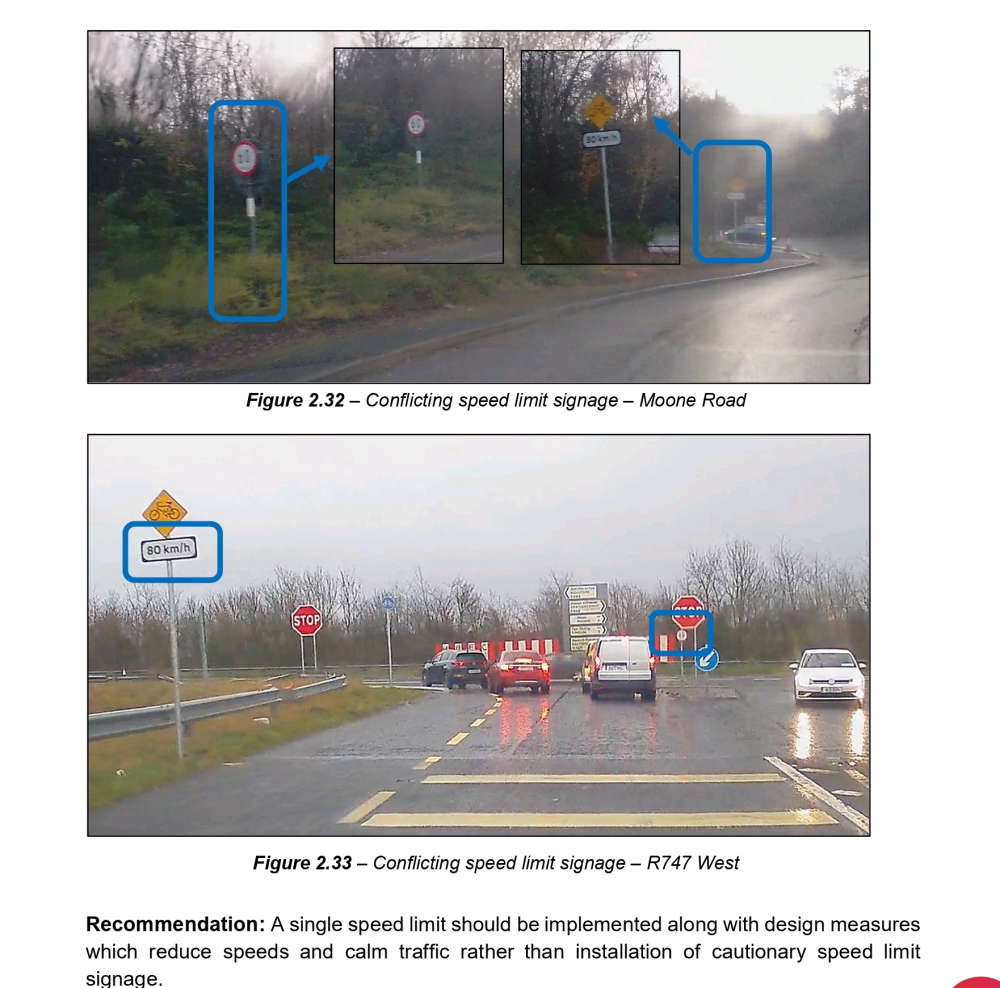
It warns that stop lines are set too far back from junctions, reducing visibility for drivers entering the R448. It also points to inconsistent speed limit signage, an overuse of cyclist warning signs, and signs obscured by vegetation or dirt. In several locations, road markings and cycle crossing markings were missing or incomplete, reducing clarity for all road users.
For pedestrians, further major red flags were highlighted.
The audit found that footpaths abruptly end at several points, forcing pedestrians onto the cycle track, where they are exposed to the risk of being struck by cyclists.
“Pedestrians will be required to continue their journeys within the cycle track, exposing them to the risk of collision with cyclists,” the report warns.
This lack of proper segregation between pedestrians and cyclists is described as a critical safety flaw, with the audit calling for immediate changes to improve separation and ensure safer conditions for both groups.
Another discovery in the audit is the issue of blocked drainage gullies, which cause water pooling along the cycleway, creating slippery conditions for all road users. “Ponding observed at several locations within the active travel facilities poses a hazard for cyclists and pedestrians,” the report states.
This problem is compounded by blocked gullies that prevent proper drainage, increasing the risk of slips and falls, particularly in wet weather.
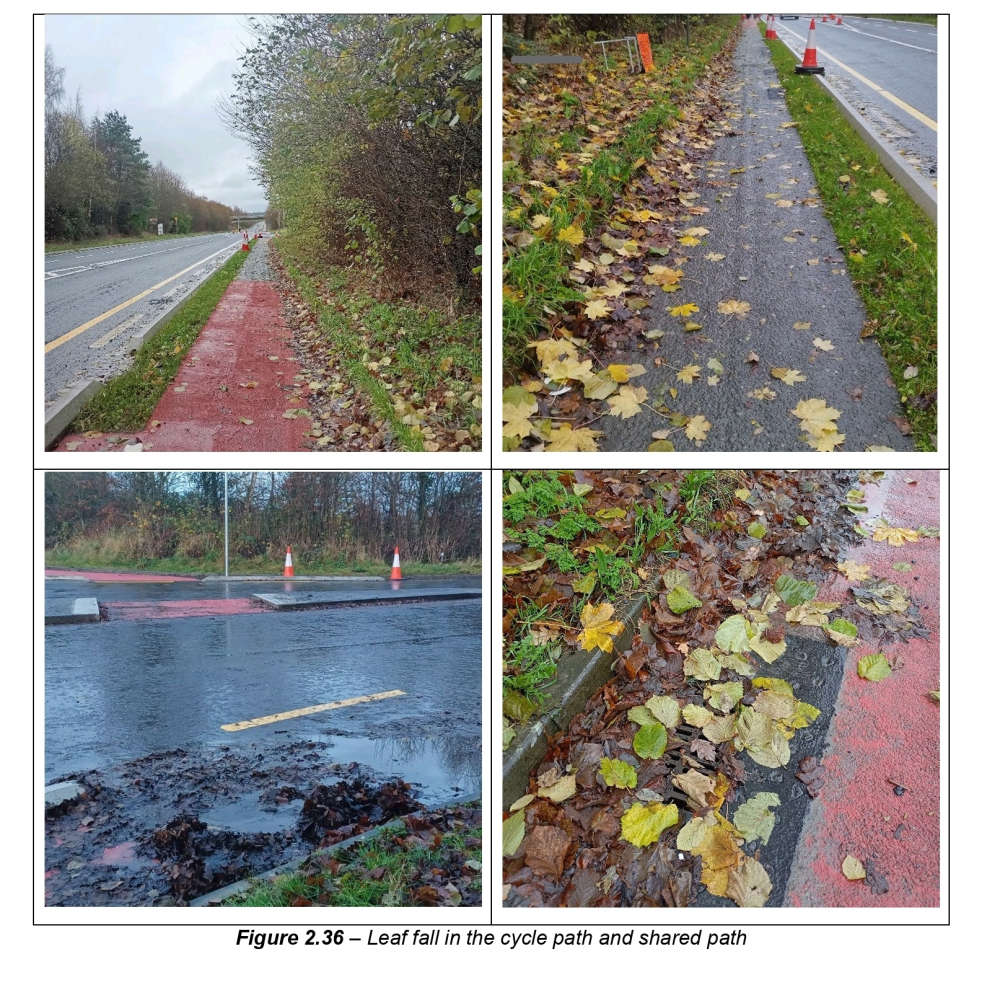
The audit warned that improved drainage is essential to maintain safety.
“Proper drainage systems must be put in place and regularly maintained to prevent water pooling along the cycleway.”
Kildare County Council has defended the cycleway, describing it as part of a national pilot scheme to test different types of cycling segregation in rural areas.
However, local opposition has mounted.
A petition against the cycleway has attracted hundreds of signatures, with critics accusing the council of wasting public money on a project that fails to meet local needs.
Locals have expressed frustration that the cycleway does not connect major towns and fails to provide the infrastructure needed for effective rural transport.
The audit outlined a number of recommendations, including narrowing the road to reduce speeds, installing traffic islands to calm traffic, improving signage and lighting at gateways, enhancing pedestrian and cyclist segregation, and fixing drainage issues to eliminate slippery conditions.
Meanwhile, in a letter last October, Transport Minister Darragh O'Brien stated that the cycleway is being delivered by Transport Infrastructure Ireland (TII) in partnership with Kildare County Council as part of the National Cycle Network (NCN) Plan, published in 2024.
He said the project aims to assess how best to integrate cycling and vehicular traffic on Irish roads.
“As the reallocation of existing road space to provide segregated cycle facilities and the use of quiet roads for cycling are relatively novel concepts in an Irish context, it is therefore prudent to pilot and assess these concepts in situ,” Minister O’Brien said.
 Kildare-Based Animal Rescue Group Continue Calls To Ban Sulky Racing On Public Roads
 National Homeless Figures Increased By Almost 200 In February
 "It's Ridiculous, We Are Still Back In The Nineties": Concern Over Safety Issues At Athy Train Station Highlighted
 Piper’s Hill College Among Schools Awarded National LGBTQ+ Quality Mark
 North Kildare Road Closures Planned As Major Water Works Get Underway
 Kfm Obituary Notices
 Damaged Water Mains In Maynooth To Be Replaced, With Works Commencing Next Week
 Planning Approved for €260m Expansion of Newbridge Brewery